
Watching other mice fight changed how male laboratory mice later faced an opponent, according to research published in Nature on November 4, 2026. Animals that observed repeated encounters showed some of the same behavioral and neural changes as animals that participated. The result is evidence about learning through observation—not a demonstration of downloading martial arts into a human brain.
That distinction is especially important because the study has attracted comparisons to The Matrix. The Debrief used that analogy in its November 6 coverage. The actual experiments, described by Princeton Neuroscience Institute and the research paper, involved repeated social exposure over days, carefully separated groups of mice and measurements of specific brain signals.
Three groups, then a tougher encounter
The researchers compared animals with fighting experience, animals allowed to observe encounters and animals without that experience. Spectators were separated by a clear barrier. They could receive visual, auditory and olfactory information, but could not take part in the fights themselves.
Training took place over eight days, with three ten-minute sessions each day. On the ninth day, mice encountered more challenging opponents in three four-minute rounds. This arrangement let researchers ask whether previous observation changed later behavior when the observer finally had to act.
The observing mice and experienced fighters began attacking sooner and were less likely to turn their backs on an opponent. Crucially, this did not translate into an overall increase in time spent attacking. The result was more specific than a general claim that watching violence simply makes an animal more violent.
Separating those outcomes matters. Starting an action more readily, remaining engaged with an opponent and spending more total time attacking are different behaviors. Treating them as interchangeable would erase the very distinctions that the experiment was designed to measure.
A shared shift in brain activity
The team also recorded signals across 12 brain regions using optical-fiber methods. The measurements tracked activity associated with excitation and inhibition. Experience and observation produced overlapping changes, including reduced inhibitory signaling in relevant circuits.
The researchers then tested the importance of that inhibition rather than merely noting a correlation. Restoring inhibitory activity reversed aspects of the animals’ prepared state. That intervention strengthens the argument that the shared neural change had a functional role in subsequent behavior.
It does not mean the two kinds of learning were identical. Observation reproduced part of what happened after direct experience, not every feature of it. Nor did the experiment show that a complete memory, a technical routine or an opponent’s precise movements had been transferred from one animal to another.
The work therefore offers a possible account of how information acquired indirectly can alter readiness for a later social encounter. It brings a familiar behavioral question into a measurable neural setting: what changes when an animal learns from another’s experience rather than its own?
Why the human leap is premature
Male mice navigating laboratory aggression are not people mastering a sport, learning surgery or watching a film. Human skills combine perception, physical practice, language, judgment and social context. This experiment cannot establish the effects of violent entertainment on people, much less resolve arguments about behavior outside the laboratory.
The investigators have discussed future possibilities for reproducing activity patterns. That is a proposed research direction, not an achievement already demonstrated by this paper. A suggestion that future stimulation might imitate aspects of learning should not be converted into a claim that scientists can already install complex skills.
There are also ordinary limits to generalization. The animals, task, training schedule and recorded brain regions define the conditions under which the result was obtained. Additional experiments would be needed to establish how broadly the mechanism applies across different forms of observation, different behaviors and other populations.
What makes the study notable is not a science-fiction shortcut. It is the combination of controlled observation, later behavioral testing and an intervention in a candidate brain mechanism. Together, those steps offer a more concrete explanation for how watching can prepare an animal to act, while leaving the distance between that finding and instant human expertise firmly intact.
Sources and further reading
This independently written report distinguishes the source publication’s topic lead from the primary records and corroborating material linked below. Historical documents and contextual images are dated explicitly.
- Topic lead: The Debrief, November 6, 2026
- Primary Nature paper: Aggression experience and observation drive shared behavioural and neural changes
- Princeton Neuroscience Institute: Mice that watch fights come away battle-ready
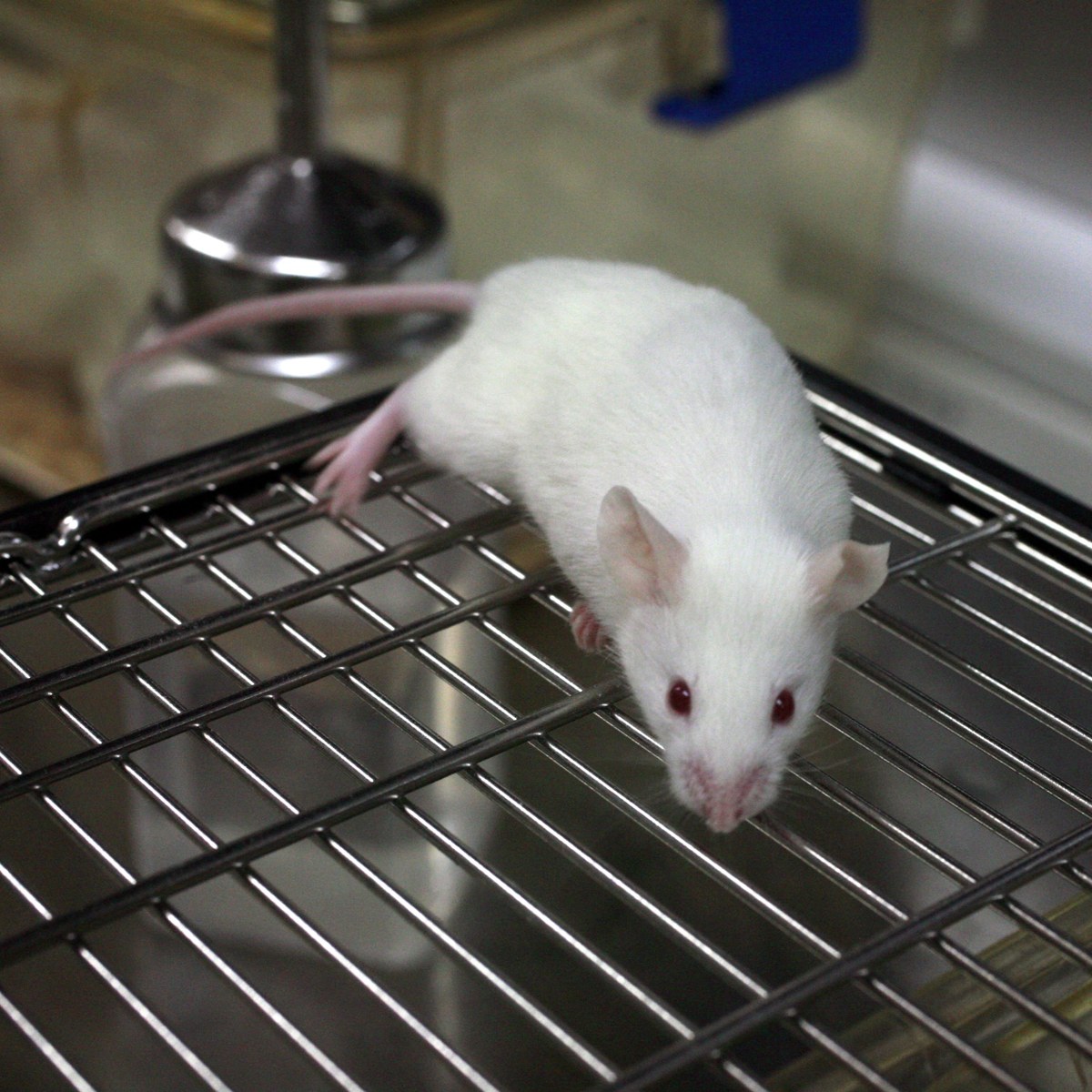
Image credit and reuse: Laboratory mouse in an archival photograph from July 2008 by Rama. Contextual image only: not a mouse from the Princeton experiment. The publicly credited mirror uses a square crop; resized and JPEG recompressed. Photo and cropped derivatives: CC BY-SA 2.0 France. Image source and attribution · License / reuse terms. Resized and JPEG recompressed; native thumbnail derivatives may be cropped. No synthetic imagery. Credited public image mirror.