
An internal CIA inspection completed in August 2001 warned that information overload could leave a potential warning unidentified. The report, examined in a version bearing June 17, 2026 release-approval markings, describes the Counterterrorist Center as both highly committed to its mission and strained by immediate demands. Its significance lies in that combination, not in an unsupported claim that inspectors knew the September 11 attacks were coming.
The Black Vault highlighted the records on October 6, 2026 following a declassification-review process. The inspection itself predates the attacks. It therefore captures concerns expressed before the catastrophe, rather than findings written afterward with full knowledge of what occurred.
Growth did not eliminate analytical pressure
The executive summary says the center’s personnel had grown by 74 percent over the preceding five years and its budget had more than doubled. It also notes that much recent budget growth came through supplemental funding, which inspectors described as unpredictable. More resources and uncertainty about sustained funding could therefore coexist.
Inspectors praised a workforce that understood its mission and believed its work saved lives. Customers described the center as an important source of expertise and valued its responsiveness. The report also recorded improved relationships with other organizations, including greater exchanges of personnel and information since an earlier inspection.
Those positive findings are part of the record, not a distraction from the warnings. Omitting them would make the document look like a uniformly negative verdict that its authors did not write. The analytical problem was how an active, motivated organization could still struggle to turn incoming information into a sufficiently broad understanding of threats.
Customers wanted detailed warning about terrorists’ plans, including targets, dates and places. At the same time, pressure to disseminate immediate threat reporting left analysts with less time to identify patterns or build context for policymakers. The report describes a tension between rapid response and sustained strategic work.
Too much to process, too little time to reflect
The inspection says employees frequently operated in a state of crisis and worked extra hours to complete essential tasks. It identifies burnout and limited time for strategic reflection as risks. Managers were aware of those pressures, but inspectors acknowledged that staffing and the recurring nature of crises constrained their options.
Successful collection could itself produce a problem. Operations against terrorist cells generated material that needed to be scanned, prioritized and exploited. The report states that demands on the center could prevent it from exploiting everything it collected, creating a risk that a warning would go unrecognized.
Language processing was one part of that bottleneck. The executive summary recommends a plan for the Language Exploitation Branch to address workflow and morale issues. That finding connects an apparently administrative matter to a substantive intelligence problem: collected information is not useful warning until someone can understand and assess it.
The report also describes challenges in recruiting and retaining experienced personnel, defining career paths and coordinating with other parts of the agency. Those are organizational observations, not evidence that one particular employee deliberately suppressed a specific warning. Redacted passages do not supply the missing proof for such an allegation.
Reading the document alongside later investigations
The 9/11 Commission’s published report provides a separate investigative perspective on pre-attack intelligence and policymaking. Its account includes missed information-sharing opportunities, disputes over resources and the slow development of a broader strategy. Those findings offer context without making the August inspection a substitute for the commission’s much wider inquiry.
An inspection identifies organizational strengths, weaknesses and recommendations within its scope. It does not necessarily determine how a particular failure occurred, who knew a particular fact at a particular time or whether a different staffing decision would have prevented an attack. Those causal questions require additional records and analysis.
The release history also matters. An earlier version of the inspection was already public; the 2026 review should not be described as the first revelation that the report existed. This article relies on the linked 2026-reviewed text and does not claim that every quoted statistic became public for the first time this year.
The surviving warning is serious enough without embellishment. Before September 11, inspectors described an organization capable of collecting substantial information but struggling to preserve time, expertise and capacity for analysis. That is evidence about institutional vulnerability. It is not evidence that the government orchestrated the attacks or that the report contained their precise operational blueprint.
Sources and further reading
This independently written report distinguishes the source publication’s topic lead from the primary records and corroborating material linked below. Historical documents and contextual images are dated explicitly.
- Topic lead: The Black Vault, October 6, 2026
- Primary CIA declassification-review packet: EOM-2019-00272, August 2001 inspection
- Independent investigative context: 9/11 Commission Report, Chapter 6
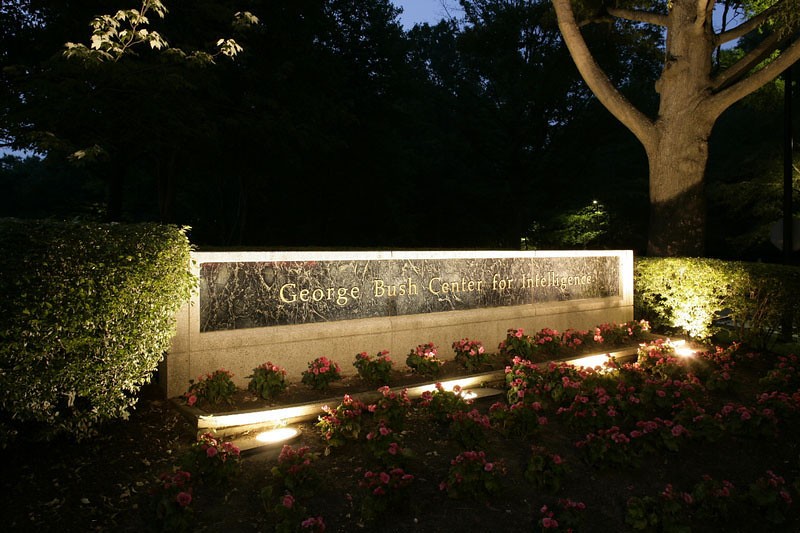
Image credit and reuse: The entrance sign outside the CIA’s George Bush Center for Intelligence in an agency archive photograph posted in 2011; precise capture date is not independently established. Central Intelligence Agency; U.S. public domain. Context only—not the 2001 inspection, its staff or the 2026 declassification review. No endorsement implied. Image source and attribution · License / reuse terms. Resized and JPEG recompressed; native thumbnail derivatives may be cropped. No synthetic imagery.