A laboratory study has combined discarded plastic and an industrial residue to make a carbon-nanotube-rich additive for construction materials. In the researchers’ best-performing mixture, compressive strength rose by 33.1 percent and flexural strength by 54.3 percent. Those improvements are promising, but a separate headline figure about cutting emissions must be read against its actual comparison.
The Nature Communications paper, published October 31, 2026, reports an estimated 65.8 percent reduction in emissions for its additive-production route relative to conventional carbon-nanotube additive production. It does not establish that an entire concrete building, the whole construction industry or every mixture containing the additive would emit two-thirds less carbon.
Two waste streams, one laboratory process
The Zhejiang University-led research uses plastic as a carbon source and red mud as a catalyst-bearing material. Red mud is a residue associated with alumina production. The approach seeks to obtain useful nanocarbon while avoiding a costly purification step before the resulting composite is incorporated into an alkali-activated binder.
The reported process first breaks plastic down through pyrolysis at around 500 degrees Celsius. A subsequent catalytic stage operates at approximately 850 degrees. These are controlled, energy-consuming processing steps, not evidence that plastic and red mud spontaneously become a building material when mixed at room temperature.
The resulting composite contains carbon nanotubes, structures with mechanical properties that can help reinforce a surrounding material. In this study, the best reported dosage corresponded to about one percent nanotubes by weight. Strength measurements cited in the paper were taken after 28 days of curing.
An alkali-activated construction material is not automatically interchangeable with every ordinary Portland-cement concrete. The binder chemistry, ingredients, curing conditions and test method influence performance. The measured improvements should therefore be understood as results for the studied formulation, not universal upgrades available to every construction project.
Plastic type makes a major difference
The experiments also show why “plastic waste” cannot be treated as a single uniform ingredient. Polyethylene produced approximately 262 milligrams of nanotubes per gram of plastic under the tested conditions. A real discarded detergent container yielded about 206 milligrams per gram, providing a useful test beyond a pristine laboratory feedstock.
Other polymers behaved differently. Polystyrene produced a higher reported yield, about 367 milligrams per gram, but with poorer nanotube quality. Polyethylene terephthalate performed much less effectively, at about nine milligrams per gram. Polyvinyl chloride presented difficulties that make simple claims about processing all plastics together especially misleading.
Quality matters as much as quantity. Adding more nanotube-containing material did not indefinitely improve the binder. Excessive addition could encourage clumping, reducing the benefit of reinforcement. A useful manufacturing process would need to manage the consistency of both its waste inputs and its resulting additive.
The broader importance of characterization is not new. NIST’s earlier work on carbon-nanotube measurement emphasized the difficulty of understanding materials that can contain multiple structures and impurities. That background helps explain why a promising yield alone is not enough to demonstrate a dependable construction ingredient.
Reading the environmental numbers correctly
Alongside the emissions estimate, the study reports reductions of roughly 71.1 percent in energy use and 13.6 percent in cost compared with conventional nanotube-additive production. These figures come from the study’s assessment of a defined production route. They should not be transplanted into claims about the lifecycle of a whole building.
The process also produces hydrogen as a byproduct. Its practical value depends on collection, purity, demand and the wider process design. Calling it a byproduct is justified; treating it as guaranteed revenue or proof of a commercially self-sufficient system would require evidence that the laboratory study does not provide.
Questions remain about sorting mixed waste, scaling the equipment, controlling industrial residues and maintaining consistent material quality. Long-term durability and performance under real construction conditions also matter. A strong specimen at 28 days does not by itself establish decades of reliable service.
The Debrief brought attention to the research on November 5. The underlying paper supports a bounded conclusion: selected waste streams can produce a reinforcing composite that improved a particular laboratory binder, with potentially favorable additive-production economics and emissions. Whether that approach becomes a practical construction process depends on the next stages of testing—not on the largest number in a headline.
Sources and further reading
This independently written report distinguishes the source publication’s topic lead from the primary records and corroborating material linked below. Historical documents and contextual images are dated explicitly.
- Topic lead: The Debrief, November 5, 2026
- Primary Nature Communications study, October 31, 2026
- NIST background: Carbon nanotube measurements, April 15, 2008
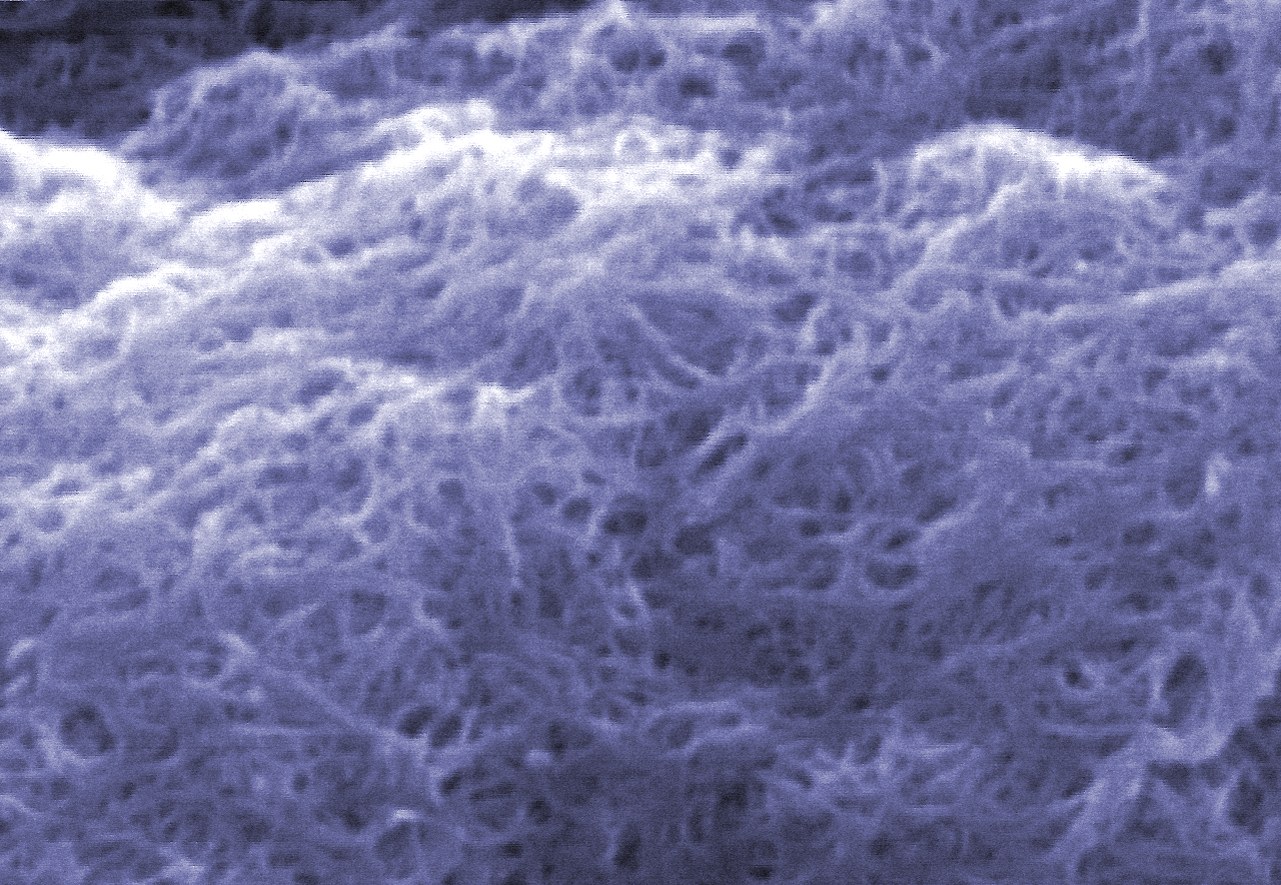
Image credit and reuse: NIST scanning-electron micrograph of cleaned carbon nanotubes, released April 15, 2008; source-added color improves visibility. Archive context explaining nanotubes, not the Zhejiang waste-derived composite or a test of the new construction material. NIST; U.S. public domain. Image source and attribution · License / reuse terms. Resized and JPEG recompressed; native thumbnail derivatives may be cropped. No synthetic imagery.