
Paraguay's Senate removed President Santiago Peña from office on November 6 after an impeachment process tied to the collapse of Ueno Bank, turning a financial emergency affecting depositors into a change at the top of the government. The Senate's own account confirms that lawmakers found Peña responsible for misconduct in office and voted unanimously among those present to separate him from the presidency.
The BBC reported that 44 senators supported removal, with one absent, and that Peña's deputy, Pedro Alliana, had been sworn in to take over. It also reported criminal accusations against Peña and his arrest following the vote. Those developments must be distinguished: removal through impeachment is not itself a final criminal conviction concerning the banking allegations.
A banking failure becomes a governing crisis
According to the BBC, Ueno's failure prevented an estimated three million depositors from accessing savings and pensions after intervention by the central bank. The scale of those reported access problems prompted queues at branches and demonstrations. The article describes public anger over money people could not withdraw, not a verified calculation that every frozen deposit has been permanently lost.
Peña had links to private business interests associated with the bank, and the BBC reported that he held shares in its owning company until 2025. The impeachment accusations included conflicts of interest, manipulation of regulatory oversight and the diversion of pension resources. These are the allegations that shaped the political case; they should not be rewritten as findings already upheld by a criminal court.
Peña denies wrongdoing. His lawyers challenged the case and the procedure, and their objections are recorded in the Senate's official summary as well as independent reporting. Including that defense does not reverse the parliamentary result. It makes clear that a contested accusation and the institutional decision taken in response are separate parts of the record.
What the Senate's account establishes
The chamber says the impeachment process began November 5 and continued the following day. Representatives from the lower house presented the accusation and supporting arguments before the Senate, which sat as the body responsible for deciding whether Peña should remain in office. Its summary identifies the internal impeachment procedure and records the steps through which the case proceeded.
The Senate also reports that Peña requested a 72-hour extension to prepare his defense and that lawmakers rejected the request. His legal representatives then appeared to argue on his behalf. One objection was that the accusation failed to identify concrete rules he had personally violated; another concerned the effect of a resignation he had already offered.
Those details matter when evaluating the process. A statement that the chamber reached a unanimous decision does not mean the defense agreed that the proceedings were valid or fair. The official account records both the decision and the objections, leaving readers able to distinguish the existence of the vote from the arguments over its legal basis.
Resignation, removal and the criminal case
Independent reporting says lawmakers pursued removal rather than accepting Peña's resignation. The BBC explains that this affected the protections normally available to former presidents. It reports that prosecutors accused him of breach of trust and administration for personal gain. An accusation or arrest marks a stage in a criminal process, not proof that every element of an offense has been established.
The Senate itself describes the case before it as misconduct in the exercise of public office and distinguishes its procedure from an ordinary criminal trial. That distinction is essential to accurate coverage. Political accountability can determine whether an official continues governing, while criminal responsibility requires its own process and evidence under the relevant law.
What remains unresolved for depositors
Alliana has promised that people affected by the financial collapse will be compensated, according to the BBC. That is a commitment attributed to the incoming president. It is not confirmation that every account is already accessible, that a compensation mechanism has been fully implemented or that the eventual cost has been independently determined.
The most immediate questions therefore extend beyond the identity of the president: how depositors regain access to money, what regulators establish about the bank's condition, and how the criminal allegations are tested. The source material reviewed for this article does not establish completed repayment or a final judicial outcome. Neither should be implied simply because the impeachment vote has finished.
For now, the confirmed political event is Peña's removal on November 6, supported by the Senate's primary account and corroborating reporting. The banking response, the successor's promises and the accusations against the former president remain distinct developments that require further evidence and updates as their respective processes continue.
Sources and further reading
This independently written article draws on the reporting and primary materials linked below. The Disclose.tv item supplied the topic lead; it was not used as the sole factual source.
- Disclose.tv — topic lead
- Paraguayan Senate — official November 6 proceedings (primary, Spanish)
- BBC — removal, banking crisis, allegations and defense
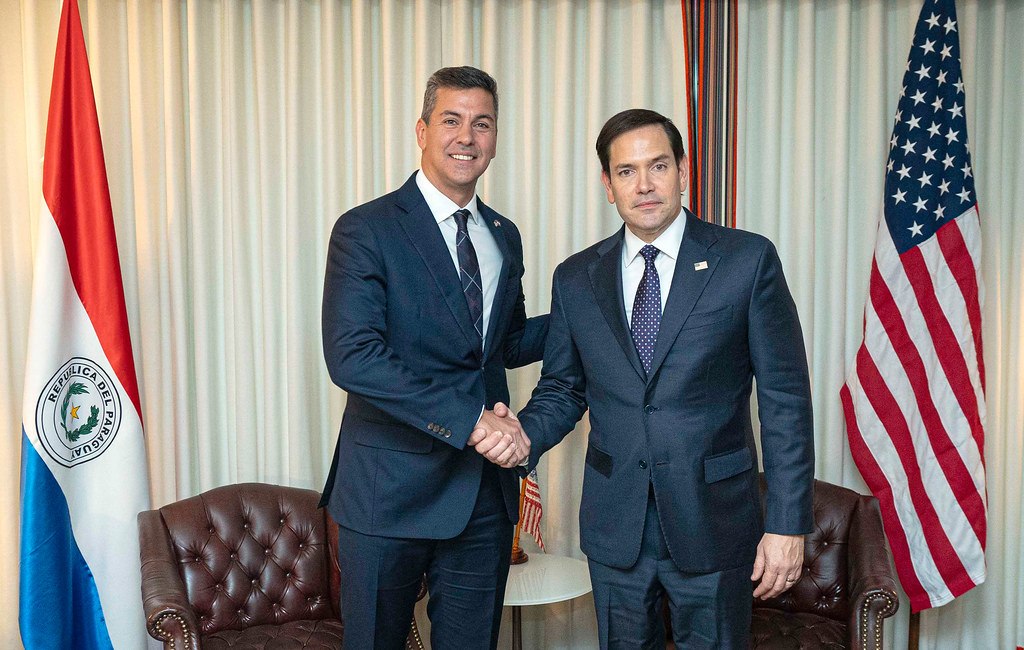
Photo credit and reuse: Santiago Peña meets Secretary Marco Rubio in Washington on January 21, 2025. Freddie Everett / U.S. Department of State. File photograph predating the banking crisis; it does not depict impeachment or arrest. JPEG recompressed. No editorial crop; automatic theme thumbnails may be cropped. Photo: Public domain in the United States — official federal government work. Source and rights · License / reuse terms.