
A new report from human-rights organization Safeguard Defenders alleges that Chinese party-state institutions have expanded a network of overseas liaison points used to monitor and influence diaspora communities. The report identifies 1,247 designated points in at least 91 countries, but its count should not be presented as 1,247 criminal convictions or independently proven clandestine police stations.
Released November 6, the report, titled A Formula for Repression, draws on public Chinese official material to describe links between overseas organizations and authorities inside China. Independent reporting by CTV News, published through CP24, documents both the organization's claims and a caution from Canada's public-safety minister against treating every named community association as a confirmed instrument of wrongdoing.
What the researchers counted
Safeguard Defenders says its investigation examines a system broader than the physical offices commonly described as overseas police stations. Its focus includes designated liaisons connected to police, courts, prosecutors, justice bodies and the Overseas Chinese Federation. The central allegation is that apparently ordinary community connections can become infrastructure through which authorities extend surveillance and control beyond China's borders.
The full report explains that researchers assembled a larger set of entries before applying a test concerning documented grid-management functions outside China. It says 74 designating authorities or bodies met its criteria and were linked to the 1,247 points included in the final count. Those methodological choices are important: the headline number reflects the organization's defined category, not a universally agreed government register.
The authors describe their findings as conservative and say the wider network could be larger. That is their assessment, not an independently established upper or lower boundary endorsed by this publication. The existence of a documented organizational relationship also needs to be distinguished from proof of the conduct of a particular individual at a particular location.
Canada's response includes a warning against overreach
CTV's report says Safeguard Defenders identified at least 18 overseas associations in Canada that it alleges participate in the system. Canadian Public Safety Minister Gary Anandasangaree told the broadcaster that foreign interference was unacceptable, while stressing that the specific allegations had not been investigated. He said law enforcement would need to examine the information with nuance.
That caution has a practical reason. Community organizations can provide sports, cultural and other everyday services, and suspicion directed at an entire diaspora can itself cause harm. Identifying possible state influence requires evidence about institutional direction and actual activity, rather than assumptions based on ethnicity, language, membership or attendance at a public event.
The CP24 account also reports that Canadian police had investigated alleged overseas police locations without laying charges, and that organizations associated with a closed Montreal investigation were suing the federal government. The absence of charges does not settle every allegation in the new report. It does mean a news account must not portray the report's Canadian entries as established criminal verdicts.
Beijing rejects the characterization
The Chinese embassy in Ottawa disputed the allegations in a response reported by CTV, denying the existence of what it called Chinese overseas police stations. The embassy also said China respected other countries' judicial sovereignty and followed a principle of non-interference. Those responses belong alongside the accusations rather than being omitted from a summary of the dispute.
Safeguard Defenders argues that changing the names or removing visible police branding does not resolve the underlying problem if control functions continue through other associations. The disagreement therefore concerns both the evidence of particular activity and the definition of the network being described. A change in labeling alone cannot establish either that all improper activity ended or that every community link is unlawful.
What would establish the next stage
For public authorities, the relevant next steps would involve examining the underlying records and any evidence of coercion, unauthorized policing or interference within their jurisdiction. A research organization's open-source mapping can prompt those inquiries. It is not a substitute for the different standards that apply to police investigations, administrative decisions and criminal trials.
For readers, the key distinction is between a serious, documented allegation about institutional reach and a proven case against a named association or person. The report is a primary source for what Safeguard Defenders alleges; the independent coverage is also valuable because it includes official skepticism and the embassy's denial. Neither allows this publication to certify every entry in the dataset.
The public debate now has a substantial new collection of claims and cited records to test. Assessing them carefully means protecting people from coercion while also avoiding collective blame. Any later findings by investigators or courts should be reported on their own terms, rather than retroactively assumed from the scale of the report's headline figure.
Sources and further reading
This independently written article draws on the reporting and primary materials linked below. The Disclose.tv item supplied the topic lead; it was not used as the sole factual source.
- Disclose.tv — topic lead
- Safeguard Defenders — November 6 report announcement (primary)
- A Formula for Repression — full primary report and methodology (PDF)
- CTV News / CP24 — allegations, ministerial caution and Chinese embassy response
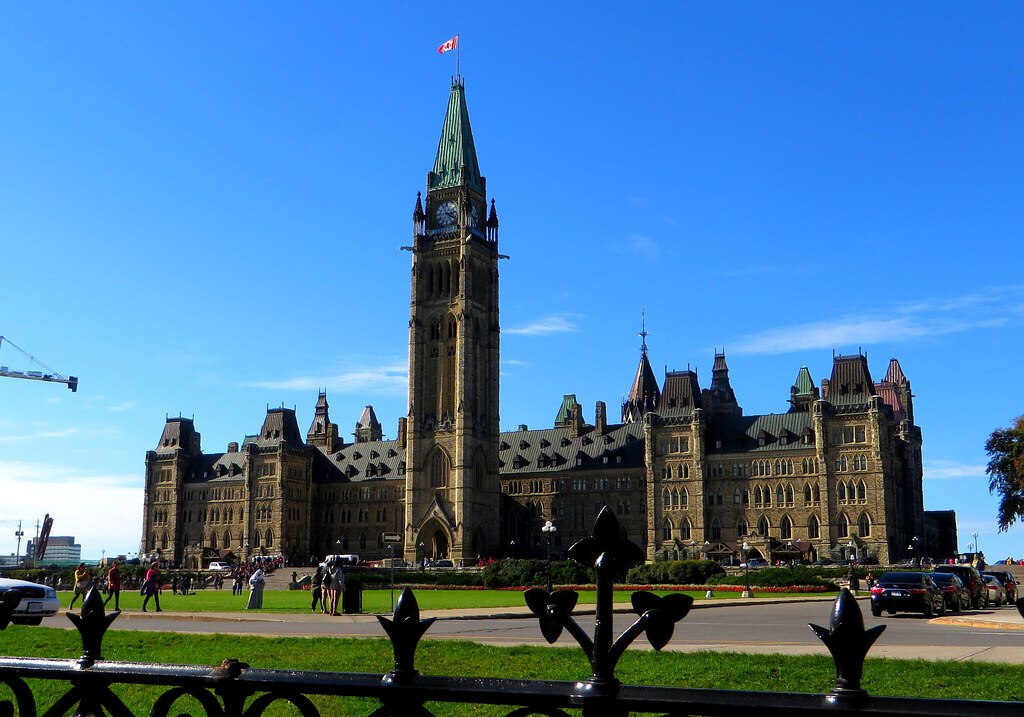
Photo credit and reuse: Centre Block on Parliament Hill in Ottawa, September 29, 2016. Ken Lund. Contextual archive photograph for the Canadian policy response; this building is not identified as an alleged liaison point. Resized and JPEG recompressed. No editorial crop; automatic theme thumbnails may be cropped. Photo: CC BY-SA 2.0. Source and rights · License / reuse terms.